
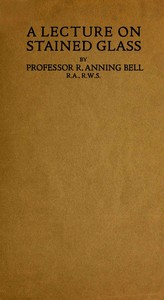
A Lecture on Stained Glass by Robert Anning Bell
Imagine you're in a grand, quiet hall. Sunlight streams through massive, colorful windows, painting the floor with saints and symbols. 'A Lecture on Stained Glass' is your personal guide to understanding that spectacle. Written by the artist Robert Anning Bell over a century ago, this book is the text of a talk he gave, and it reads like you're in the audience. He starts with the basics—why glass has color, how it's made, the role of the lead strips holding it all together—but he's never boring. He's a practitioner explaining his craft.
The Story
There isn't a fictional plot here, but there is a journey. Bell walks us through the story of stained glass itself, from its medieval beginnings to its revival in his own Victorian era. He explains the big shift from the old way of making pictures (using many small, deeply colored pieces) to the newer, more painterly approach. He doesn't just list facts; he shows you the why. Why did styles change? Often, it was because of new buildings with bigger windows, or because artists wanted to create more detailed faces and landscapes. He points out the practical and artistic choices behind every window you've ever seen.
Why You Should Read It
I loved this because Bell writes with clear passion. He isn't a distant historian; he's an artist who has struggled with the same materials. He'll casually mention how a certain blue is difficult to produce, or why a design looks good from the nave but might be confusing up close. He makes you appreciate stained glass as a unique art form, one that dances with light. It’s not a painting on a wall; it's a living thing that changes with the hour and the weather. Reading this gave me a whole new set of eyes. Now, I don't just see 'a pretty window.' I see chemistry, engineering, and centuries of artistic debate frozen in glass.
Final Verdict
This is a perfect short read for curious minds who visit museums, churches, or historic buildings and want to look deeper. It's for the traveler who wants to understand more than the guidebook says, the art lover interested in the 'how,' and anyone who enjoys a clear, friendly explanation from an expert. It's not a heavy textbook; it's a one-hour conversation with a master that will forever enrich the way you see light, color, and history.
This historical work is free of copyright protections. You are welcome to share this with anyone.
Margaret Wright
8 months agoWow.





Ethan Hernandez
2 months agoSimply put, the emotional weight of the story is balanced perfectly. Worth every second.