
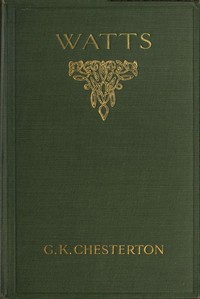
G. F. Watts by G. K. Chesterton
G.K. Chesterton, the man famous for his wit, his Father Brown mysteries, and his love of paradox, turns his pen to a very different subject: George Frederic Watts, a Victorian painter known for grand, symbolic works. This book is less a straight biography and more a conversation. Chesterton walks us through Watts's life and, more importantly, his art, acting as our enthusiastic and opinionated guide.
The Story
There isn't a plot in the traditional sense. Instead, Chesterton structures his thoughts around Watts's artistic journey and his major themes. He talks about Watts's early struggles, his monumental paintings like 'Hope' and 'Love and Life,' and his ambitious but never finished 'House of Life' fresco project. Chesterton paints a picture of Watts as a man out of step with his time—not interested in fashionable realism, but obsessed with expressing eternal truths and moral ideas through allegory. The "story" is really Chesterton figuring out what drove this quiet, serious man to create such loud, philosophical art.
Why You Should Read It
You should read this because it's Chesterton at his most personally engaged. His admiration for Watts is clear, but he doesn't shy away from the oddness or the melancholy in the paintings. He gets why some people might find them overblown. What I love is how he connects Watts's art to bigger ideas about Victorian England, about faith, and about the purpose of beauty. He argues that Watts wasn't just decorating walls; he was trying to build a modern mythology. You come away feeling you've understood both the artist and the writer a bit better. It's a masterclass in looking at art with both your heart and your head.
Final Verdict
This book is perfect for fans of Chesterton who want to see him in a different light, or for anyone curious about Victorian art beyond the Pre-Raphaelites. It's also great if you enjoy personality-driven criticism—where the reviewer's voice is as compelling as the subject. It's not a long or difficult read, but it's packed with sharp observations. If you want a straightforward art history text, look elsewhere. But if you want a lively, thoughtful, and deeply human exploration of one artist by another, this little-known gem is well worth your time.
The copyright for this book has expired, making it public property. Access is open to everyone around the world.

William Garcia
1 year agoSurprisingly enough, the clarity of the writing makes this accessible. I couldn't put it down.