
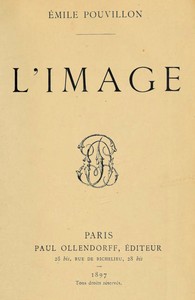
L'image by Emile Pouvillon
Émile Pouvillon's L'Image is a novel that feels both incredibly specific to its time and place, yet speaks to something universal. Published in 1892, it's a deep dive into the psychology of a single, ordinary man, set against the backdrop of rural French life.
The Story
The plot is deceptively simple. Jean, a hardworking and somewhat superstitious farmer, purchases a striking devotional painting at a village fair. Initially, it's a source of pride, a beautiful object for his home. But soon, Jean's relationship with the painting changes. He begins to treat it not as a representation of the divine, but as a divine presence itself. He confides in it, seeks its approval for daily decisions, and feels its imagined gaze constantly upon him. This obsession isolates him from his practical wife and neighbors, who see his behavior as strange, even blasphemous. The story follows the slow, steady tightening of this psychological grip, as Jean's world shrinks to the space between himself and the painting on his wall.
Why You Should Read It
What grabbed me wasn't a twisty plot, but Pouvillon's incredible skill at getting inside Jean's head. You feel the creeping unease right along with him. The book asks brilliant questions without ever stating them outright: Where is the line between deep faith and dangerous delusion? How do our beliefs shape our reality? Pouvillon doesn't mock Jean; he paints him with empathy, making his descent painfully understandable. The setting is also a character—the rhythms of farm life, the gossip of the village, the stark contrast between Jean's internal storm and the quiet countryside around him. It's a masterclass in building tension through psychology, not action.
Final Verdict
This book won't be for everyone. If you need fast-paced stories with clear heroes and villains, you might find it slow. But if you're a reader who loves character-driven fiction, historical settings that feel authentic, or psychological studies that make you think, L'Image is a hidden gem. It's perfect for fans of quiet, literary horror (think the unease of Shirley Jackson) or anyone interested in 19th-century French realism. It's a short, potent novel about the power of an idea—and how the things we worship can sometimes consume us.
The copyright for this book has expired, making it public property. Thank you for supporting open literature.
Edward Harris
1 year agoWithout a doubt, the emotional weight of the story is balanced perfectly. This story will stay with me.
Dorothy Clark
1 year agoBased on the summary, I decided to read it and the depth of research presented here is truly commendable. Exceeded all my expectations.
Sarah Ramirez
1 year agoComprehensive and well-researched.





Charles Martinez
1 year agoThis work demonstrates a clear mastery of contemporary theories.